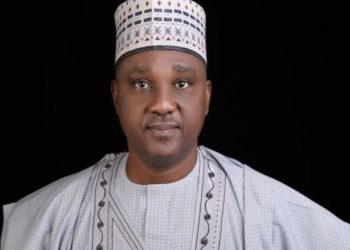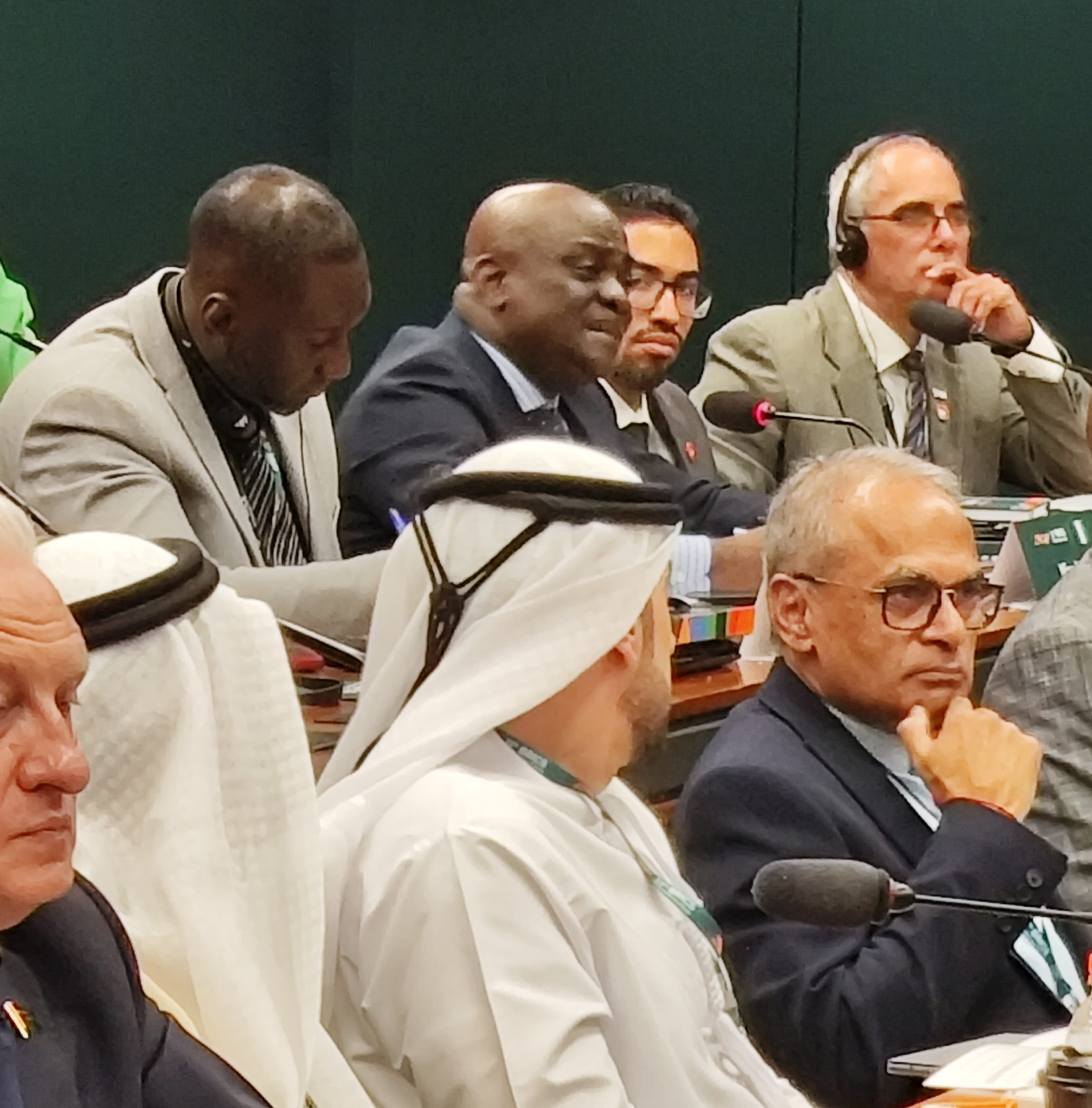
The Chairman of the House of Representatives Committee on Foreign Affairs, Hon. Busayo Oluwole Oke, has called for the strengthening of BRICS trade cooperation, emphasizing its strategic importance amid the evolving global geopolitical and economic landscape.
Speaking in his capacity as the lawmaker representing Ijesa North Federal Constituency, Hon. Oluwole Oke highlighted the shifting dynamics of global power and trade, noting that countries must respond to new realities shaped by protectionist policies, technological transformation, and supply chain disruptions.
“In the early 2000s, I came across an article titled ‘Building Better Global Economics: BRICS’ by Jim O’Neill, then Chief Economist at Goldman Sachs. At the time, the concept seemed idealistic and far-fetched. Yet, two decades later, BRICS has become a functional bloc with clear goals and structures,” Hon. Oluwole Oke said.
He noted that while Nigeria had once aspired to become a full member hoping for a BRINCS configuration the country currently holds the status of a BRICS Partner Nation.
“Today, we meet at a critical juncture in world history. The certainties of the past are gone. In their place, we are witnessing the birth of a new, undefined global order,” he remarked. “In this emerging world, the BRICS bloc including Brazil, Russia, India, China, South Africa, and its newly admitted members such as Egypt, Ethiopia, Iran, Saudi Arabia, and the UAE stands as a formidable force, representing over 40% of the global population and nearly one-third of global GDP.”
Oke emphasized that strengthening trade within BRICS and its partners is not merely aspirational but a necessity. He pointed to escalating tariff conflicts and trade disruptions as evidence of the urgency to redefine intra-BRICS trade relations.
Strategic Priorities for BRICS Trade Enhancement
Hon. Oluwole Oke outlined several strategic priorities for advancing BRICS trade:
1. Diversifying Trade Channels He called for a move away from overdependence on traditional markets, urging BRICS Plus nations to deepen cooperation through mutual trade, investment, and the development of resilient trade corridors. He stressed the importance of local currency settlement systems to reduce vulnerability to volatile currency fluctuations.
2. Enhancing Intra-BRICS Trade Despite the bloc’s potential, trade among BRICS members remains below expectations. Hon. Oluwole Oke recommended the reduction of trade barriers, harmonization of standards, and support for regional value chains in sectors such as agriculture, pharmaceuticals, manufacturing, and critical minerals.
3. Coordinating Strategic Resources Describing BRICS as rich in energy, minerals, agricultural resources, and human capital, he proposed a coordinated approach to resource management. “Imagine a BRICS framework for food and energy security, backed by joint policies and investments,” he said.
4. Embracing the Digital and Green Economies He highlighted the need to pivot toward digital trade and sustainability, advocating for the development of shared e-commerce platforms, fintech solutions, and unified cybersecurity standards. He also urged BRICS nations to lead in setting green trade regulations and investing in clean technologies.
5. Institutionalizing Expansion and Global Partnerships Hon. Oluwole Oke welcomed the inclusion of new member states in BRICS and called for greater engagement with other regional blocs such as ASEAN, the African Union, and MERCOSUR. “BRICS must not be seen as a closed club, but as a dynamic coalition of emerging voices,” he stated.
*A Call to Action*
In conclusion, Hon. Oluwole Oke underscored the role of BRICS in shaping a more equitable global trading system. “Strengthening BRICS trade is about rejecting dependency and embracing destiny. It is about ensuring that prosperity is not the privilege of a few but the right of all,” he said.
He ended with a powerful call to unity and leadership: “Let us trade. Let us build. Let us lead.”