Basic education is the foundation of national development. It is the level at which children acquire the literacy, numeracy, values, attitudes and social competencies required for further education and responsible citizenship. No country can achieve sustainable economic growth, social stability or technological advancement without establishing a functional and inclusive basic education system.
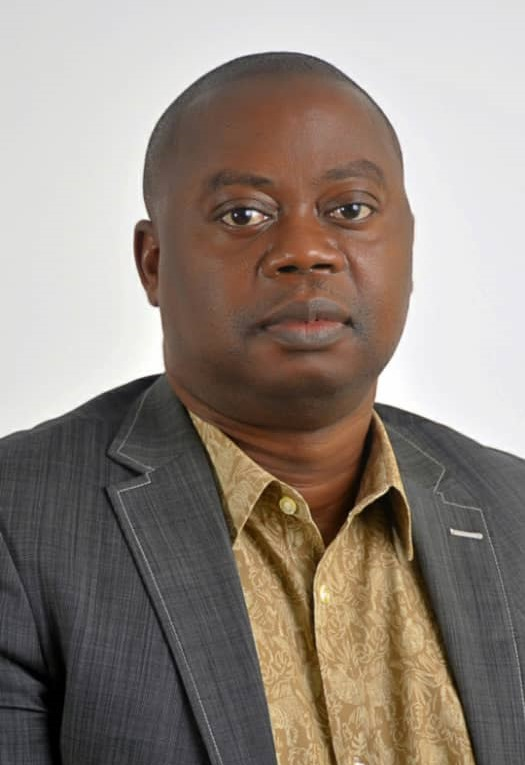
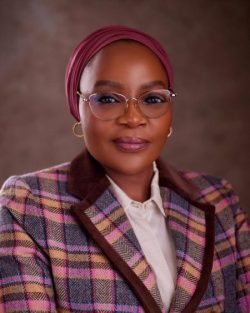
It is, therefore, appropriate to recognise the significant reforms being undertaken by the current leadership of the Universal Basic Education Commission under the Executive Secretary, Dr Aisha Garba, with the support of the Deputy Executive Secretary (Technical), Mr Rasaq Olajuwon Akinyemi. Since assuming office, the two leaders have brought renewed energy, strategic direction, innovation and greater accountability to the administration of basic education in Nigeria.
Dr Garba assumed office as Executive Secretary in December 2024 with more than 24 years of experience in education and international development. Her previous service as a Senior Education Specialist at the World Bank, combined with professional engagements in Nigeria, Ghana, Somalia, Kenya, the United States and the United Kingdom, prepared her for the enormous responsibility of coordinating interventions in Nigeria’s basic education subsector.
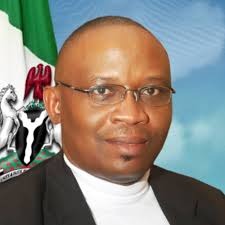
Supporting her is Mr Rasaq Olajuwon Akinyemi, the Deputy Executive Secretary in charge of Technical Services. His responsibilities cover crucial areas such as educational planning, teacher development, infrastructure, quality assurance, digital learning and the technical supervision of UBEC-supported interventions. The productive collaboration between the Executive Secretary and her deputy has provided the Commission with purposeful leadership at a time when Nigeria’s basic education system requires urgent and far-reaching reforms.
One of the most important achievements of the present leadership is the development and operationalisation of the 2025–2031 UBEC Strategic Blueprint. The blueprint provides a coordinated national framework for addressing the longstanding challenges confronting basic education.
In the past, interventions were sometimes implemented as isolated projects, while programmes initiated by the Federal Government, states and development partners were not always sufficiently coordinated. The new Strategic Blueprint brings these efforts together under four major pillars: quality teaching and learning, equity and access, sustainable financing, and institutional strengthening.
The importance of this initiative cannot be overstated. Effective education reform cannot be achieved through occasional construction projects or the periodic distribution of instructional materials. It requires a long-term strategy that links policies, resources and interventions to measurable improvements in enrolment, retention, teaching quality and learning outcomes.
By establishing clear priorities, the Strategic Blueprint has provided UBEC, State Universal Basic Education Boards and development partners with a common direction for planning, implementation, monitoring and evaluation. The reform of the Basic Education Action Plan is another notable achievement. For about two decades, states relied on an outdated planning template that was insufficiently connected to performance and measurable results. Under the present leadership, UBEC has redesigned the plan into a digitised, flexible and results-oriented instrument supported by a rapid-assessment framework.
This reform is gradually transforming the way states identify their educational needs and allocate resources. Rather than preparing general lists of projects, states can now use relevant data to determine the communities requiring additional classrooms, qualified teachers, instructional materials, digital facilities or interventions for vulnerable children.
The result is a more responsive planning system capable of reflecting the peculiar educational needs of different states and communities. This is particularly important in a diverse country where the challenges confronting schools in conflict-affected areas may differ considerably from those facing densely populated urban communities or remote rural settlements.
The reform of the UBEC Matching Grant Utilisation Formula represents another major achievement of Dr Garba and Mr Akinyemi. Previously, the eligible expenditure categories were largely concentrated on physical infrastructure. The revised formula now accommodates Early Childhood Care, Development and Education, information and communication technology, digital learning systems, quality assurance and education-data infrastructure.
This reform aligns educational financing more closely with learning outcomes and the overall quality of education. While classrooms and other physical facilities remain important, school buildings alone cannot guarantee meaningful learning. Resources must also be invested in teachers, instructional materials, technology, assessment and school supervision.
Through improved engagement with state governments and the reform of the matching-grant framework, 28 states and the Federal Capital Territory accessed more than ₦200 billion in previously unutilised matching grants in 2025. This was a major breakthrough, considering the longstanding accumulation of intervention funds that many states had been unable to access. The release and responsible utilisation of these resources have the potential to expand access, rehabilitate schools, provide instructional materials, strengthen teacher development and create safer and more conducive learning environments for millions of Nigerian children.
Another remarkable feature of the present administration is its commitment to digital transformation. Dr Garba and Mr Akinyemi have demonstrated an understanding that Nigeria’s basic education system must prepare children for a world increasingly shaped by technology, automation and artificial intelligence.
Within the Commission, digital communication and collaboration platforms are being deployed to improve productivity, reduce administrative bottlenecks and promote data-driven decision-making. These include the Microsoft 365 ecosystem, the UBEC Hub intranet and digital document-management and communication systems.The Commission has also inaugurated a network of digital champions drawn from its departments, units, zonal offices and state structures. These officers are expected to promote innovation, assist their colleagues in adopting modern technologies and strengthen the sustainability of UBEC’s digital reforms.
Beyond the internal administration of the Commission, the leadership has continued to promote Digital Learning Centres, Model Smart Schools, Smart Classrooms and improved education-data systems. These interventions are intended to equip teachers and learners with the competencies required to function effectively in the 21st century. The involvement of Mr Akinyemi in the technical implementation of these programmes has been particularly significant. As Deputy Executive Secretary (Technical), he has supported the translation of broad policy objectives into practical programmes in schools and state education agencies.
No education system can rise above the quality of its teachers. The present UBEC leadership has recognised this fundamental principle by prioritising teacher professional development.
In collaboration with the British Council, UBEC has supported the training of master trainers in digital literacy, blended learning and technology-assisted teaching through programmes such as Stimulating Teacher Resourcefulness in Digital Education and Supporting Pedagogical Rigour in Networked Teaching.
Participants drawn from the 36 states and the Federal Capital Territory are expected to transfer the knowledge and skills acquired to other teachers. This multiplier approach can create a growing pool of educators capable of integrating technology into classroom instruction, particularly in Mathematics, Science and English.
UBEC has also trained master trainers in electronic quality assurance. This initiative is strengthening the ability of education officials to monitor schools, evaluate teaching and learning, identify deficiencies and recommend timely interventions.
The Commission’s collaboration with the Global Partnership for Education has further strengthened teacher development and school-support programmes in states such as Oyo, Adamawa and Katsina. These interventions demonstrate a welcome shift from concentrating principally on physical infrastructure to addressing what actually happens inside the classroom.
A newly constructed classroom will have a limited impact if the teacher lacks the required subject knowledge, pedagogical competence, instructional materials and professional motivation. The attention being given to teacher capacity is, therefore, central to improving learning outcomes.
Nigeria continues to confront the serious challenge of millions of out-of-school children. Poverty, insecurity, cultural practices, displacement, disability, inadequate facilities and regional inequalities continue to deny many children their constitutional right to education.
Dr Garba has consistently emphasised that education is a fundamental right rather than a privilege. Under her leadership, UBEC has intensified attention to girls, children with disabilities, orphans, learners in conflict-affected communities and children living in remote rural settlements.
The Commission’s involvement in the Better Education Service Delivery for All programme and the HOPE for Quality Basic Education initiative reflects this commitment. These interventions are designed to improve foundational literacy and numeracy, expand access to quality education and strengthen education systems at the state level. The emphasis on marginalised children is commendable because national averages frequently conceal deep inequalities.
An intervention may be celebrated as successful while children in rural communities, informal settlements or areas affected by insecurity remain excluded. A truly universal basic education programme must ensure that no child is abandoned because of gender, disability, social background, geographical location or economic circumstances.
The current leadership has also taken steps to update minimum standards for school infrastructure, teaching and learning materials. This is essential for regulating the sector and ensuring that UBEC-supported projects across the country meet acceptable quality benchmarks.
Quality assurance must go beyond occasional inspection visits. It should be a continuous process involving school self-evaluation, professional supervision, accurate data, community participation and timely corrective action. By integrating electronic quality-assurance mechanisms, UBEC is creating opportunities for more efficient monitoring and reporting.
Mr Akinyemi’s technical oversight is especially relevant in this area. The effectiveness of national policies ultimately depends on the quality of their implementation in states, local governments and individual schools. Technical monitoring helps to ensure that projects meet approved specifications and contribute to the educational objectives for which public funds were released.
Another defining feature of Dr Garba’s administration is its commitment to partnership. UBEC has strengthened engagement with state governments, SUBEBs, development partners, civil-society organisations and other public institutions.Engagement with the Bureau of Public Procurement is aimed at promoting sound procurement practices and ensuring that public resources deliver value. Collaboration with civil-society organisations can also strengthen citizens’ participation in monitoring projects and holding education authorities accountable.
These partnerships are necessary because the challenges confronting basic education are too extensive for UBEC to address alone. State and local governments, communities, traditional institutions, teachers’ organisations, the private sector and development partners all have important roles to play.
The present leadership deserves praise for recognising that collaboration is not a sign of institutional weakness. On the contrary, it is an effective method of mobilising expertise, resources and public support around the shared objective of providing quality education for every Nigerian child. Education reforms often require time before their full effects become measurable. Nevertheless, the direction of change under Dr Aisha Garba and Mr Rasaq Olajuwon Akinyemi is encouraging.
More states have accessed previously unutilised intervention funds. Educational planning is becoming more evidence-based and results-oriented. Digital technologies are being introduced into administration and classroom delivery. Teachers and school-support personnel are receiving relevant professional training. Quality-assurance mechanisms are being modernised, while greater attention is being directed towards foundational learning and vulnerable children.
These reforms are also strengthening public confidence in UBEC as the principal federal intervention agency for basic education. The emerging emphasis is no longer solely on the amount of money released or the number of projects inaugurated. Increasing attention is being paid to the actual benefits received by teachers, learners, schools and communities.
This results-oriented approach represents an important cultural change. Educational achievement should be measured by whether children enrol, remain in school, acquire relevant knowledge and skills, and successfully complete their basic education.
Despite these achievements, Nigeria’s basic education system continues to face considerable challenges. Millions of children remain outside school.Many public schools lack adequate classrooms, qualified teachers, libraries, laboratories, water, sanitation, electricity and digital connectivity. Insecurity continues to disrupt schooling in several parts of the country. Teacher shortages and uneven deployment persist, while disparities between urban and rural schools remain significant. Inflation and rising construction costs also reduce the purchasing power of available intervention funds.
Recognising the achievements of the UBEC leadership should not prevent stakeholders from acknowledging these realities. Instead, the progress already recorded should encourage the Federal Government, states and communities to provide stronger support for the reforms.
State governments must pay their counterpart funds promptly and utilise grants responsibly. They must recruit and motivate qualified teachers, maintain completed projects and provide transparent accounts of expenditure. Communities must also protect school facilities and encourage parents to enrol and retain their children in school. Dr Aisha Garba and Mr Rasaq Olajuwon Akinyemi deserve commendation for the purposeful leadership they have so far demonstrated.Their work reflects an understanding that basic education is both a social right and a national development imperative.
The task ahead is to sustain the momentum and ensure that every policy formulated at the Commission’s headquarters produces measurable improvements in classrooms across the 36 states and the Federal Capital Territory. Every grant accessed must translate into improved teaching and learning. Every teacher-development programme must result in better classroom practice. Every digital investment must benefit teachers and learners, including those in remote and disadvantaged communities. Every monitoring exercise must promote accountability rather than become an administrative formality.
Ultimately, the enduring legacy of the present leadership will not be measured merely by policy documents, meetings, workshops or the volume of funds released. It will be measured by the child who returns to school, the teacher who becomes more competent, the learner who acquires foundational literacy and numeracy, and the disadvantaged community that gains access to quality education. The emerging record indicates that UBEC is moving in the right direction under the leadership of Dr Aisha Garba and the technical support of Mr Rasaq Olajuwon Akinyemi. With sustained political commitment, responsible participation by state governments and rigorous public accountability, their reforms can establish a stronger foundation for Nigeria’s educational, social and economic transformation.
Oni is a Professor in the Department of Educational Foundations, Faculty of Education, University of Lagos, where he teaches, Sociology of Education, Philosophy of Education and social pedagogy in Education.