There are moments in the life of a nation when the performance of a public officer deserves to be assessed not through the narrow prism of politics, but by the depth of reforms initiated, the problems confronted, the institutions strengthened and the measurable difference made in the lives of citizens. Nigeria’s education sector, burdened for decades by inadequate access, weak learning outcomes, skills mismatch, infrastructural deficits, recurring industrial disputes and the enormous challenge of out-of-school children, requires precisely this kind of assessment.
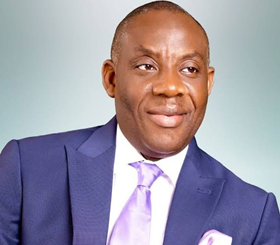
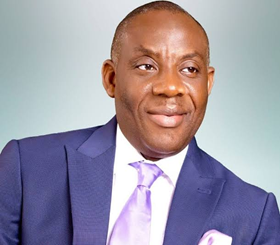
Against this background, the tenure of Dr. Maruf Olatunji Alausa, CON, as Nigeria’s Minister of Education has emerged as an important chapter in the ongoing effort to reposition Nigerian education. Working alongside the Minister of State for Education, Professor Suwaiba Sa’id Ahmad, the Federal Ministry of Education, its agencies, state governments and other stakeholders, Alausa has pursued an ambitious reform agenda extending from the basic classroom to technical colleges, universities, polytechnics and colleges of education.
What makes the emerging story particularly significant is the breadth of the interventions. Rather than concentrating almost exclusively on tertiary education as sometimes happens when public discussion of Nigerian education becomes dominated by universities the current reform trajectory has attempted to address the education value chain as an interconnected whole. This philosophy is consistent with President Bola Ahmed Tinubu’s Renewed Hope Agenda, which places human-capital development, social inclusion, skills, innovation and economic productivity at the heart of Nigeria’s development aspirations.
At the basic education level, one of the most difficult challenges confronting Nigeria remains the large population of children outside school. The problem has persisted for decades and is particularly acute in some parts of the country. The Alausa-led Ministry has approached the challenge through a combination of improved education data, learner identification and tracking, enrolment interventions, alternative learning pathways and collaboration with states and development partners.
In May 2026, Alausa reported that government interventions had returned more than one million street and out-of-school children to classrooms. The precise size of Nigeria’s out-of-school population continues to be debated, which is itself why the Ministry’s increasing emphasis on reliable education data and learner tracking is important. What should not be lost in the statistical debate, however, is the significance of returning large numbers of children to organised learning. Every child successfully moved from the street into a classroom represents not simply another enrolment number, but a life given a better chance and a potential social problem transformed into an opportunity for national development.
The government’s approach to Almajiri and Tsangaya education also deserves attention. Instead of treating a centuries-old social and educational institution purely as a problem to be abolished, the policy direction has increasingly focused on integration, improvement of facilities, training of Mallams and incorporation of literacy, numeracy and other learning opportunities into existing structures. This is complemented by bilingual schools and partnerships intended to reach children who might otherwise remain outside conventional education.
Equally important is the recognition that getting children into school is only the beginning. Access without learning cannot constitute educational success. Nigeria must ensure that children who spend years in classrooms can actually read, write, calculate, think critically and acquire the competencies appropriate to their age and level.
It is therefore significant that the Federal Ministry of Education and the Universal Basic Education Commission launched major school improvement and teacher professional development interventions designed to reach more than 223,000 teachers and school administrators nationwide. By the end of 2025, UBEC also reported interventions involving the construction of more than 4,900 classrooms, renovations and water, sanitation and hygiene facilities, with more than 2.3 million learners directly affected.
These numbers matter because educational reform eventually has to reach the classroom. Policies formulated in Abuja mean little to a child sitting under a leaking roof, a teacher without appropriate instructional skills or a school without basic learning facilities. The combination of infrastructure, school management and teacher professional development reflects a more comprehensive understanding of basic education improvement.
The ongoing curriculum reform is another potentially transformative intervention. For years, employers, educators and parents have raised concerns about the gap between what Nigerian students learn and the competencies required by contemporary society and the labour market. The comprehensive review of curricula across basic, senior secondary and technical education therefore represents an important attempt to confront curriculum overload while strengthening skills acquisition, digital competence, creativity and practical learning.
This is particularly relevant in an era being transformed by artificial intelligence, automation, robotics, data science and other emerging technologies. The fundamental question is no longer simply whether a Nigerian child has attended school, but whether that child is being prepared for the world in which he or she will live and work.
Alausa’s advocacy of a possible extension of compulsory basic education to 12 years should also be understood within this wider conversation. It remains a policy proposal requiring stakeholder engagement rather than a completed restructuring of Nigeria’s education system. Nevertheless, the willingness to interrogate inherited structures and ask whether they remain suitable for contemporary Nigeria demonstrates the kind of policy openness required in a rapidly changing world.
Perhaps one of the most refreshing aspects of the current education reform agenda is the renewed emphasis on Technical and Vocational Education and Training, TVET. For decades, Nigeria inadvertently created a social hierarchy in which university education was regarded as the principal route to success while technical and vocational education was frequently treated as an inferior alternative.
The economic consequences have been enormous. Nigeria produces graduates searching for limited white-collar jobs while industries simultaneously struggle to find competent technicians and artisans. In many communities, highly skilled electricians, plumbers, welders, automobile technicians, machinists and other craftsmen remain in short supply.
The renewed TVET programme seeks to reverse this mentality by linking skills acquisition directly with employability, entrepreneurship and economic independence. The Federal Government has targeted large-scale youth participation in vocational training, with ambitions extending to about one million young Nigerians. Government has also reaffirmed its commitment to funding approved tuition and charges in Federal Technical Colleges.
This is not merely an educational programme; it is potentially an economic revolution.
Nigeria cannot industrialise through university degrees alone. A functional economy requires engineers and technicians, architects and builders, doctors and medical technologists, software engineers and skilled digital technicians. The dignity of labour must therefore be restored alongside the dignity of scholarship. By repositioning TVET, the Ministry is helping Nigeria move from an excessive obsession with certificates towards greater recognition of competence and productivity.
The growing emphasis on digital education further reinforces this direction. The Federal Ministry of Education’s collaboration with Amazon Web Services on digital skills, including cloud computing and machine learning, began with coordinators from 43 federal universities and polytechnics, with plans for broader participation across tertiary institutions. The Ministry announced a cost-sharing arrangement for professional certification, thereby reducing financial barriers for participating students and educators.
This is precisely the kind of connection that must increasingly exist between Nigerian education and the global economy. A graduate entering the labour market in the late 2020s is not competing only with the person sitting beside him in a Nigerian classroom. He is potentially competing with skilled workers in India, China, Europe, North America and other parts of Africa. Nigerian education must consequently become globally competitive while remaining responsive to national realities.
Another landmark development of the Tinubu administration has been the establishment and expansion of the Nigerian Education Loan Fund, NELFUND. While NELFUND is a presidential initiative with its own statutory management structure, its rapidly expanding operations form an important component of the broader transformation of access to tertiary education.
The philosophy behind the student loan programme is compelling: no qualified Nigerian should be compelled to abandon higher education solely because his or her parents cannot immediately afford the cost.
By May 2026, President Tinubu reported that NELFUND had facilitated access to tertiary education for more than 1.5 million students, with over ₦282 billion disbursed. These figures demonstrate the scale at which the policy has developed.
For a low-income household, the difference between receiving educational financing and not receiving it can be the difference between a child remaining in university and dropping out. In that sense, NELFUND is more than a loan programme. It is an instrument of social mobility and an attempt to ensure that family income does not become an absolute barrier between talent and opportunity.
Yet, for many Nigerians familiar with the history of the country’s universities, perhaps the most remarkable development under the present education leadership has been the progress recorded in industrial relations.
For too long, strikes became almost an accepted feature of Nigeria’s public university system. Students gained admission without certainty about when they would graduate. Parents watched four-year programmes stretch beyond their expected duration. Lecturers became increasingly frustrated. Academic calendars were disrupted, research suffered and Nigeria’s universities struggled to compete effectively in an increasingly interconnected international higher education environment.
At the centre of many disputes was the unresolved renegotiation of the 2009 Federal Government-ASUU Agreement.
Successive efforts over many years failed to achieve a definitive breakthrough. Under the present administration, however, negotiations were reinvigorated. In October 2025, the government constituted an expanded negotiating mechanism covering the tertiary education unions. Eventually, after a stalemate spanning approximately sixteen years, the Federal Government and the Academic Staff Union of Universities concluded a new agreement in December 2025, which was formally unveiled in January 2026.
The agreement replaced the 2009 pact and included, among other provisions, a 40 per cent upward review of university academic staff emoluments effective from January 1, 2026.
This is an achievement whose significance should not be understated. Anyone familiar with the history of government-ASUU relations understands that concluding such an agreement requires patience, consultation, negotiation, fiscal engagement, compromise and political will. Even ASUU publicly acknowledged the progress while appropriately emphasising the importance of faithful implementation.
The task before government now is to ensure that implementation matches commitment. Agreements become enduring achievements when their provisions are honoured. Nevertheless, breaking a sixteen-year renegotiation stalemate constitutes an important milestone in the history of Nigerian higher education.
It also reveals something about Alausa’s leadership style: a preference for engagement and problem-solving rather than allowing disagreements to become permanent crises. If the relative stability being experienced in the university system can be sustained, the benefits will extend far beyond lecturers. Students, parents, researchers, businesses and the Nigerian economy will all benefit from predictable academic calendars.
Tertiary education infrastructure, research and innovation have similarly remained important parts of the reform programme. Through the Tertiary Education Trust Fund, substantial interventions continue across public universities, polytechnics and colleges of education. For the 2026 intervention cycle, approximately ₦2.526 billion was allocated to each beneficiary public university, ₦1.871 billion to each beneficiary polytechnic and ₦2.057 billion to each beneficiary College of Education under the annual direct intervention framework.
Beyond conventional physical infrastructure, there is increasing emphasis on research connectivity, engineering, technology and digital academic infrastructure. The Nigerian Research and Education Network intervention within TETFund’s framework is intended to improve connectivity and access to academic resources, while substantial investment has been directed towards engineering workshops, laboratories and specialised equipment.
This is the correct direction. Universities cannot produce twenty-first-century scientists and engineers using twentieth-century equipment. Researchers cannot participate effectively in global knowledge production without access to databases, digital infrastructure, laboratories, research funding and international scholarly networks.
Another initiative that particularly deserves commendation from the academic community is the renewed attention being paid to indigenous academic publishing. In March 2026, Alausa unveiled 82 academic textbooks, including 72 produced through TETFund’s Higher Education Book Development Intervention Project.
This intervention may not generate the political excitement associated with commissioning a large building, but its long-term intellectual importance could be considerable.
African universities cannot remain permanently dependent on knowledge produced elsewhere. Nigerian scholars must increasingly produce textbooks, research, theoretical perspectives and intellectual materials grounded in Nigerian and African experiences while meeting international scholarly standards. A university system that merely consumes knowledge is incomplete; great university systems also create and export knowledge.
The current reforms have also emphasised the education of girls and other vulnerable groups. Initiatives targeted at girl-child education recognise a well-established development principle: educating a girl produces benefits that extend across generations. An educated girl is more likely to become an economically empowered woman, make informed health decisions and invest in the education and welfare of her children.
The strength of the Alausa reform agenda therefore lies not necessarily in any single intervention, but in its system-wide character. Basic education is receiving attention. Out-of-school children are being targeted. Teachers are being retrained. School infrastructure is being improved. Curriculum reform is underway. Technical and vocational education is being repositioned. Digital skills are being expanded. Student financing has grown enormously. Research and university infrastructure are receiving investment. Indigenous scholarship is being promoted. And the government has achieved an important breakthrough in a university industrial-relations dispute that had lingered for years.
This does not mean that all is now well with Nigerian education. Far from it.
Millions of Nigerian children still require better access to quality education. Many schools need rehabilitation. Teacher quality remains uneven. Universities still confront inadequate facilities, overcrowding and brain drain. Research funding must become deeper and more competitive. Examination malpractice remains troubling. Graduate unemployment and the mismatch between education and industry require further attention. Quality assurance must be strengthened, and government must continue improving the reliability and transparency of education data.
The measure of serious leadership is not the absence of problems. In a country of Nigeria’s size and complexity, no Minister of Education can eliminate decades of structural challenges within a few years. The more appropriate question is whether the system is moving in the right direction and whether credible structures are being established to sustain that movement.
On that score, the evidence gives reasons for optimism. President Bola Ahmed Tinubu’s Renewed Hope Agenda places human-capital development at the centre of Nigeria’s economic transformation. This is strategically sound because the great economies of the twenty-first century will increasingly be built not simply upon what lies underneath their soil, but upon what exists inside the minds of their people.
Nigeria may possess oil, gas and enormous mineral resources, but none of these can substitute for an educated, skilled, innovative and productive population. This is where the Alausa education reforms connect powerfully with the broader Renewed Hope Agenda.
NELFUND addresses access and opportunity. TVET addresses skills and employability. Curriculum reform addresses relevance. Teacher professional development addresses learning quality. Digital education addresses future competitiveness. TETFund interventions address infrastructure and research. Indigenous publishing addresses knowledge production. The agreement with ASUU addresses institutional stability. Programmes targeting out-of-school children address inclusion and social justice.
Seen together, they reveal an attempt to construct an education ecosystem rather than pursue isolated programmes.
That is perhaps Dr. Alausa’s greatest ingenuity. Education policy cannot succeed when basic education operates in one direction, tertiary education in another, technical education is neglected and industry remains disconnected from the entire system. Nigeria needs a pipeline in which a child acquires strong foundational learning, progresses through relevant secondary education, has access to technical or academic pathways, develops employable competencies and ultimately contributes productively to society.
This should be the destination of the reforms. As an academic who has spent decades within Nigeria’s education system, I consider stability particularly important. I have watched successive generations of Nigerian students suffer the consequences of prolonged industrial disputes. I have seen parents lose confidence in the predictability of public university education. Restoring confidence cannot happen overnight, but the successful conclusion of the long-running renegotiation with ASUU offers an opportunity to build a new relationship between government and the university community.
The challenge is to protect that achievement through consistent implementation, dialogue and mutual respect.
Public officials must be scrutinised, criticised when necessary and held accountable. But public discourse also becomes impoverished when society loses the ability to recognise progress simply because those responsible are political office holders.
Commendation should not be propaganda, just as criticism should not become a refusal to acknowledge verifiable achievement.
On the available evidence, Dr. Maruf Olatunji Alausa deserves commendation for the energy, courage, innovation and problem-solving orientation he has brought to the leadership of Nigeria’s education sector. He also deserves encouragement to consolidate these reforms, address remaining weaknesses and institutionalise the gains so that they survive beyond the tenure of any individual Minister or administration.
Ultimately, the success of these reforms will not be measured by the number of policy documents produced or ceremonies held. It will be measured by the Nigerian child who can read and calculate at the appropriate age; the out-of-school child who returns to learning and remains there; the teacher who becomes more effective; the technical college graduate who establishes a successful enterprise; the university student who no longer drops out because his parents cannot pay his fees; the lecturer who works within a stable academic calendar; the researcher whose discovery becomes an innovation; and the Nigerian graduate who can compete anywhere in the world.
If these outcomes are sustained, the education reforms of the Tinubu administration may ultimately rank among the most consequential pillars of the Renewed Hope Agenda.
For Alausa, the responsibility is therefore enormous, but so too is the opportunity. Nigeria is a youthful nation. Its future is already sitting in thousands of classrooms, technical colleges, laboratories, workshops, polytechnics, colleges of education and universities across the federation. Whether that enormous population becomes Nigeria’s greatest demographic dividend or its greatest developmental burden will depend significantly on the quality of education and skills it receives today.
The current reforms point towards an important conclusion: Nigeria cannot renew hope without renewing education.
President Tinubu’s Renewed Hope Agenda can build roads, bridges, railways and other infrastructure, but the most important infrastructure any nation can build is human capacity. Physical infrastructure connects places; education connects generations to possibilities.
That is why the work being undertaken in Nigeria’s education sector deserves national attention, constructive scrutiny and support.
And that is why the emerging Alausa story should ultimately be understood not merely as the record of a Minister, but as part of a much bigger national project; the attempt to rebuild Nigeria through the minds, skills, creativity and productive capacity of its people.
Nigeria’s greatest resource is not buried beneath its soil. It is seated in its classrooms. If the reforms being championed by Dr. Alausa under President Tinubu’s Renewed Hope Agenda are faithfully implemented and sustained, Nigeria may finally be giving that resource the attention it deserves.
Oni is a Professor in the Department of Educational Foundations, Faculty of Education, University of Lagos, where he teaches, Sociology of Education, Philosophy of Education and social pedagogy in Education.